

Are you spending more time on tedious, repetitive tasks than on growing your business? From manually updating spreadsheets and chasing invoices to sending follow-up emails one by one, these small jobs accumulate, draining your team’s energy, stifling creativity, and limiting your potential for growth. For small businesses and nonprofits in Luxembourg, where every hour counts, time is the most valuable resource. The good news is that there’s a powerful solution designed to reclaim that time and unlock new efficiencies: workflow automation.
This comprehensive guide will break down everything you need to know about workflow automation. We’ll explore what it is, how it can revolutionize your operations, what processes are prime candidates for transformation, and how you can get started on your journey to greater efficiency. At UP D Marketing, we believe automation isn’t just for large corporations; it’s the key for small businesses to compete, scale, and thrive in a fast-paced digital world.
What is Workflow Automation? (And Why Should SMEs Care?)
At its core, workflow automation is the process of using technology to execute a series of tasks, based on predefined rules, without human intervention. Think of it as creating a digital assembly line for your daily operations. Each step in a process, from data entry to sending notifications, is handled by software that works 24/7. Instead of manually passing a task from one person or app to the next, the system does it for you, instantly and accurately, every single time.
This isn’t just about automating a single task, like scheduling a social media post. True workflow automation, also known as business-process-automation, connects multiple steps across different applications to manage an entire process from start to finish. Let’s look at a common scenario:
- Manual Workflow: A new lead fills out your website contact form. You receive an email notification. You stop what you’re doing, open your CRM, and manually copy and paste their details. Next, you open your email marketing software and add them to the correct list. Finally, you compose and send a welcome email. This multi-step process could take 10-15 minutes and is prone to typos or delays if you’re busy.
- Automated Workflow: A new lead fills out your website form. The system instantly and automatically creates a new contact in your CRM, adds a “new lead” tag for tracking, subscribes them to your introductory newsletter, and sends a personalized welcome email—all within seconds of them hitting “submit.” No manual work is required.
For a small business, this transition is game-changing. It eliminates the hidden costs of context-switching and administrative drag, freeing you and your team from the mundane burdens of repetitive work. This allows everyone to focus on what truly matters: high-impact strategy, building genuine customer relationships, and driving sustainable growth.
The Tangible Benefits of Process Automation for Your Business
Implementing process automation isn’t just about convenience; it delivers a measurable return on investment that can directly impact your bottom line and operational resilience.
Save Time and Reduce Manual Errors
Human error is inevitable, especially when juggling multiple tasks under pressure. A typo in an email address can cause a lead to go cold, a miscalculated invoice can damage client trust, and a forgotten follow-up can mean a lost sale. Automation eliminates these risks by performing tasks with perfect, machine-like consistency every time. This not only improves accuracy but also saves countless hours previously spent on double-checking data, finding mistakes, and making corrections.
Increase Productivity and Efficiency
When your team isn’t bogged down by repetitive admin work, their true talents can shine. Instead of copying data, salespeople can spend more time building relationships and closing deals. Instead of manually posting on social media, marketers can focus on creative strategy and campaign analysis. Leadership, freed from operational minutiae, can dedicate their energy to planning for the future. This boost in productivity means you can achieve significantly more with the same dedicated team, increasing your output without increasing your overhead.
Improve Customer Experience
In today’s market, a superior customer experience is a key differentiator. Automation allows you to deliver faster, more consistent, and more personalized service. From instant email responses to support queries that set clear expectations, to personalized onboarding sequences that make new clients feel valued, you can create a seamless and professional customer journey from the very first interaction. This level of responsiveness and attention to detail builds trust and loyalty, setting you apart from competitors who rely on slower, manual processes.
Scale Your Operations Without Scaling Your Team
One of the biggest challenges for growing SMEs is handling an increased workload. More customers often mean more paperwork, more data entry, and more administrative tasks, creating operational bottlenecks that stifle progress. Workflow automation breaks this cycle. It allows your systems and processes to handle a growing volume of work effortlessly. This means you can enabling you to scale your business and revenue without the immediate and costly need for a larger headcount.
Common Business Processes You Can Automate Today
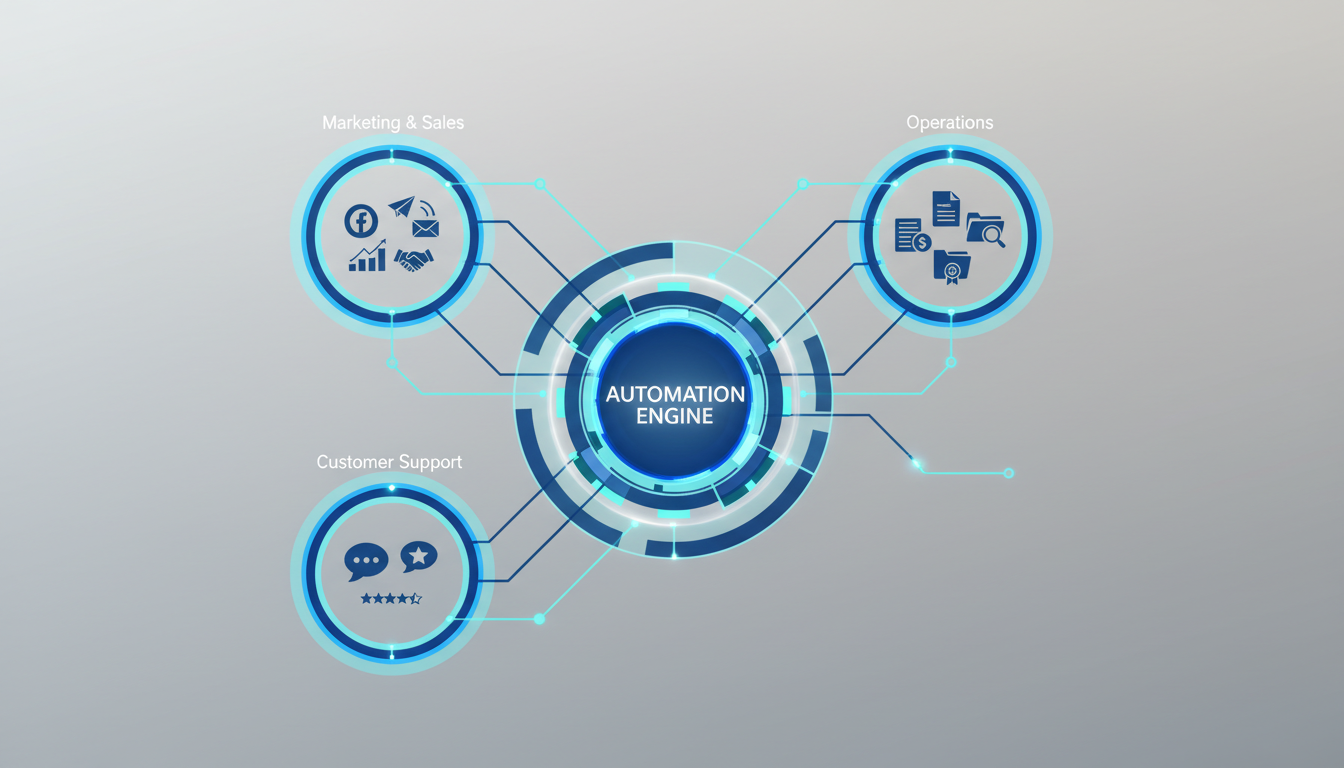
The potential applications for automation are vast and touch every part of your organization. Here are a few key areas where small businesses can see an immediate and significant impact:
Marketing & Sales
- Lead Nurturing: Automatically send a carefully crafted sequence of emails to new leads over days or weeks, educating them about your services and building trust until they are ready to buy.
- Social Media Management: Schedule a month’s worth of posts across multiple platforms in one session, and set up automations that automatically share your new blog content as soon as it’s published.
- CRM Updates: Instantly and accurately log calls, emails, and meeting notes in your CRM. This ensures your customer data is always up-to-date, providing a single source of truth for your entire team without manual data entry.
Customer Support
- Ticket Routing: Automatically assign incoming support tickets to the right team member or department based on keywords, issue type, or customer priority, ensuring faster response times.
- Automated Responses: Instantly acknowledge receipt of a customer query with an automated email that provides helpful resources or FAQs, managing expectations while they wait for a personal reply.
- Feedback Collection: Once a support ticket is marked as resolved, automatically send a follow-up email asking for a rating or review, helping you gather valuable feedback to improve your services.
Operations & Admin
- Client Onboarding: As soon as a new client signs on, trigger a complete welcome sequence that automatically sends contracts for signature, intake forms to gather necessary information, and initial instructions to ensure a smooth start.
- Invoicing and Payments: Generate and send invoices automatically based on project milestones, recurring subscription dates, or time-tracking entries. You can even automate follow-up reminders for overdue payments to improve cash flow.
- File Management: Automatically organize and save important documents to the correct cloud storage folders. For example, a signed contract from a client can be automatically renamed and saved in their specific project folder in Google Drive or Dropbox.
Choosing the Right Workflow Automation Platforms

The market for automation tools is growing rapidly, but not all are created equal. For small businesses, the ideal solutions are powerful enough to handle complex tasks yet intuitive and user-friendly enough to manage without a dedicated IT department.
No-Code/Low-Code Platforms: The SME Sweet Spot
Platforms like Make and n8n are leading the way for SMEs, and for good reason. They use a visual, drag-and-drop interface that allows you to connect different applications (like your email, CRM, project management tools, and accounting software) and build complex workflows without writing a single line of code. This accessibility is revolutionary, as it empowers business owners and their teams to become “citizen developers,” creating custom solutions that are perfectly tailored to their unique needs. It bridges the gap between rigid, off-the-shelf software and expensive, time-consuming custom development.
The Role of AI in Modern Automation
Modern workflow automation platforms are increasingly integrated with powerful AI tools like OpenAI’s GPT models. This unlocks a new level of intelligence and capability for your business. Imagine workflows that can automatically analyze the sentiment of customer feedback to flag unhappy clients, summarize long documents or email threads into concise bullet points, or even draft personalized email responses for your approval. At UP D Marketing, we specialize in leveraging these advanced tools to build truly intelligent workflows that don’t just complete tasks, but also provide insights and give our clients a significant competitive edge.
How to Get Started with Workflow Automation: A 4-Step Plan
- Identify and Map Your Repetitive Tasks: Start by looking for the biggest bottlenecks and time sinks in your daily operations. Ask your team: “What is the most boring or repetitive part of your job?” or “Which tasks are most prone to human error?” Write down the steps for these processes from beginning to end to create a clear map.
- Choose Your Tools and Define Your Goals: Based on the tasks you’ve identified and the applications you use, select a suitable automation platform. Before you build anything, clearly define what success looks like. Is your goal to save 5 hours per week on invoicing? Or to respond to all new web leads within 5 minutes? A specific goal makes it easier to measure success.
- Build and Test Your First Workflow: Begin with a simple, low-risk process, like saving email attachments to a specific folder. Build the automation step-by-step in your chosen platform. Crucially, run several tests using internal or dummy data to ensure it works exactly as intended before you activate it for live, customer-facing operations.
- Monitor, Refine, and Expand: Once your workflow is running, don’t just “set it and forget it.” Keep an eye on its performance logs to ensure it’s running without errors. Ask your team for feedback. Look for ways to improve it and, as you gain confidence, start identifying the next processes to automate as your business grows and evolves.
Why Partner with an Expert for Your Business Process Automation?
While DIY automation is possible for simple tasks, building robust, scalable, and error-free workflows that integrate multiple systems requires deep expertise. A generic, cookie-cutter template downloaded from the internet might solve one small problem but can create data silos or fail to integrate with the rest of your business ecosystem, leading to more complexity down the road.
This is where a dedicated partner makes all the difference. At UP D Marketing, we don’t just build automations; we build integrated growth engines for your business. Our approach is founded on first understanding your operations and then creating tailor-made strategies that align perfectly with your unique goals. With hands-on founder involvement on every project, you get direct, senior-level support and a partner who truly understands the nuances and challenges of SMEs and nonprofits in Luxembourg.
We combine our multichannel knowledge of advertising, SEO, and analytics with advanced technical skills in platforms like Make, n8n, and AI to create powerful, integrated systems that talk to each other. Our commitment is to build a long-term partnership based on trust and results, helping you not only implement business-process-automation but also continuously refine it for maximum impact. To see how we design and implement these powerful systems, explore our dedicated marketing and workflow automation services.
Ready to stop wasting time on manual tasks and start scaling your business smarter? Workflow automation is your next strategic step, and we’re here to help you take it.